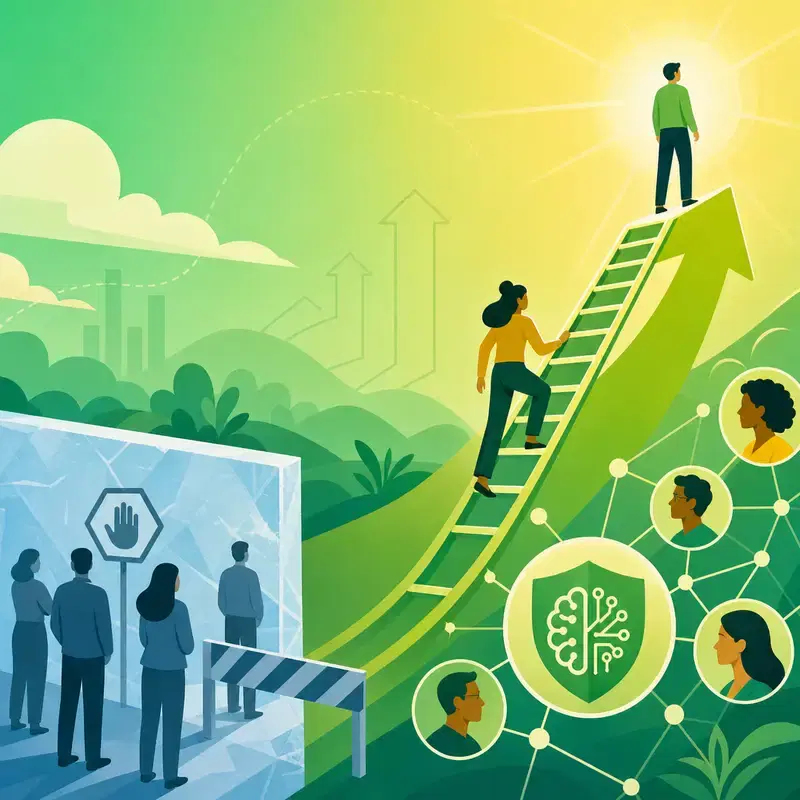
California’s GenAI Boot Camp highlights a larger shift in public-sector professional development: AI is becoming less of a specialist topic and more of a workplace capability. The important lesson is not that every government employee must become an AI engineer, but that many will need to use, evaluate, and govern AI tools responsibly.
Why this matters now
Government agencies face a difficult AI adoption problem. They are expected to improve service delivery, reduce administrative burden, and modernize legacy workflows, but they operate under constraints that private teams can sometimes underestimate: public accountability, privacy rules, accessibility obligations, procurement limits, auditability, and trust.
That makes government technology training different from generic tech upskilling. A private-sector course might emphasize speed, experimentation, or portfolio building. Public-sector training has to emphasize judgment: what data can be used, which decisions require human review, how outputs should be documented, and when automation would create unacceptable risk.
For professionals, this is a useful career signal. AI fluency is moving from optional curiosity to baseline competence in many technology-adjacent roles. The durable skill is not memorizing a tool interface. It is learning how to translate agency needs into safe, useful, measurable workflows.
How it works
Government technology training is structured learning that helps public-sector employees apply digital tools within the rules, systems, and mission of government. In the AI context, the goal is tool fluency: knowing when generative AI is appropriate, how to use it effectively, how to evaluate its outputs, and how to manage the risks around sensitive information and public decisions.
Training starts with agency needs and ends with feedback from real use.
A well-designed program starts with an agency need, not a tool demo. Participants learn to identify workflows where AI could help, such as summarization, drafting, classification, search, or service triage. They then perform a risk review: What data is involved? Could the output affect rights, benefits, safety, or public trust? What oversight is required?
Guided practice turns concepts into habits. Learners test prompts, compare outputs, spot hallucinations, apply human review, and document assumptions. Workflow adoption comes last: the tool is integrated only where it fits policy, user needs, and operational constraints. Feedback from real use then improves both the workflow and the training itself.
Real-world applications
AI tool fluency can support many public-sector workflows without replacing professional judgment. A benefits office might use AI to summarize long case notes for staff review. A transportation department might draft plain-language public updates from technical reports. An IT service desk might classify tickets or suggest knowledge base articles. A procurement team might compare requirements across documents while keeping final decisions with humans.
The common pattern is augmentation, not blind automation. Government workers need to ask: Is the model being used to generate ideas, assist staff, or influence an outcome? The closer the use case gets to a consequential decision, the stronger the need for oversight, documentation, and testing.
Where to go deeper
If you are evaluating AI training for government or regulated environments, look beyond the certificate. Strong programs should include workflow mapping, data governance, privacy, security, accessibility, evaluation methods, change management, and procurement basics. They should use realistic scenarios, not just generic chatbot exercises.
For individual learners, build a portfolio of transferable skills: framing AI use cases, writing effective prompts, evaluating model outputs, identifying risk levels, communicating limitations to nontechnical stakeholders, and designing human review steps. Those capabilities remain valuable even as specific tools change.