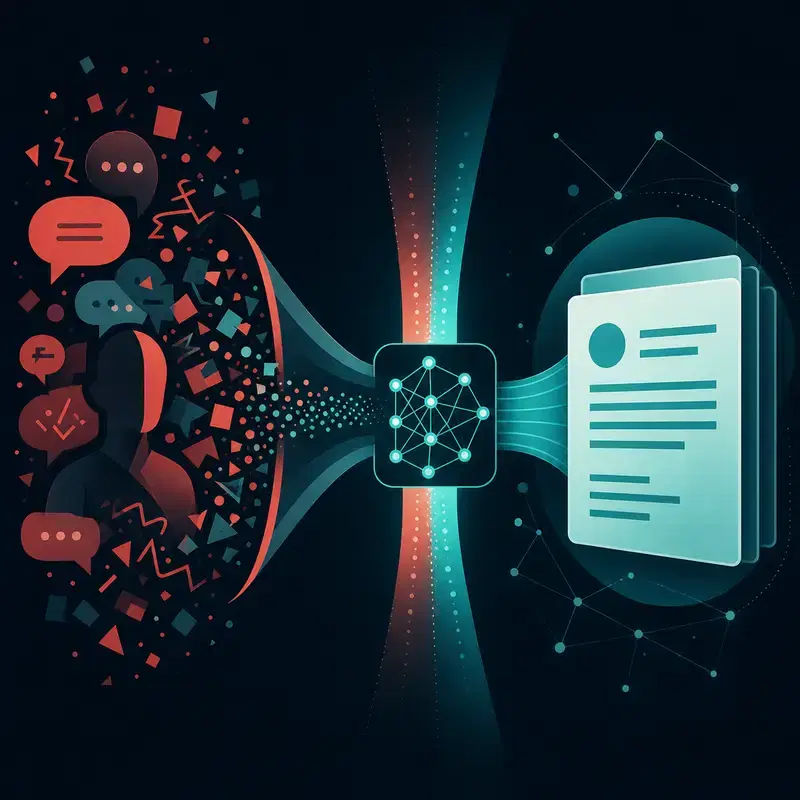
A recent Spain tech talent survey points to a useful pattern: professionals are not just anxious about AI, many are optimistic because they already use it in daily work. The career question is whether that use becomes visible workflow improvement, not just a line on a résumé.
Why this matters now
Generative AI matters because it changes the cost and speed of producing first drafts: text, code, images, summaries, analyses, plans, and explanations. For professionals, that does not mean every task becomes automated. It means more work starts with a machine generated proposal that a human must shape, verify, and connect to a real goal.
That shift raises the bar for AI literacy. Knowing how to ask a chatbot for help is useful, but not enough. The durable skill is understanding where generative AI is reliable, where it is brittle, and how to embed it into repeatable workflows with clear human review. Hiring managers can inspect outputs, before and after comparisons, documented processes, and measurable improvements. They cannot easily inspect vague claims of being AI native.
How it works
Generative AI is a class of systems that create new content by learning patterns from large amounts of data and then predicting plausible outputs from a prompt. In text systems, the model does not retrieve a fixed answer like a database. It estimates what sequence of tokens is likely to fit the user request, the conversation context, and its learned statistical patterns.
Generative AI response flow
  User prompt ·························
     │
     ▼
  Tokens and context ··················
     │
     ▼
  Model prediction ····················
     │
     ▼
  Generated output ····················
     │
     ▼
  Human review ························
A prompt becomes tokens, predictions become output, and review turns output into work.
The key mechanism is prediction under context. Your prompt, prior messages, attached documents, tool outputs, and system instructions all influence the result. The model generates content step by step, selecting likely next tokens rather than reasoning with guaranteed truth. That is why it can sound fluent while being wrong, incomplete, or overconfident.
Modern generative AI systems often add surrounding capabilities: retrieval from approved knowledge sources, tools that call software systems, guardrails that constrain behavior, and evaluation checks that compare outputs against expected standards. The model is powerful, but the workflow around it determines whether it is useful in production.
Real-world applications
In knowledge work, generative AI is strongest when it accelerates structured thinking and routine production. Common uses include drafting emails, summarizing long documents, transforming notes into reports, creating interview guides, preparing meeting briefs, and adapting content for different audiences.
For technical teams, it can help explain unfamiliar code, generate test cases, draft documentation, propose refactors, and create starter scripts. The professional advantage comes from reviewing the output, testing it, and integrating it safely, not from accepting code blindly.
In business operations, generative AI can support customer support triage, sales call summaries, policy search, internal knowledge assistants, and report generation. These are workflow problems, not magic model problems. The best implementations define the input, expected output, escalation path, quality checks, and ownership.
Where to go deeper
To build durable skill, go beyond prompt tips. Learn how context windows shape responses, how retrieval augmented generation grounds answers in trusted documents, how evaluations measure quality, and how agents use tools to complete multi step tasks. Also study data privacy, hallucination risk, bias, and human accountability.
A practical learning path is to pick one workflow you know well, map its current steps, identify the bottleneck, prototype an AI assisted version, and measure the difference. Generative AI becomes career leverage when you can show proof: faster cycle time, fewer errors, clearer documentation, better decisions, or more consistent service.