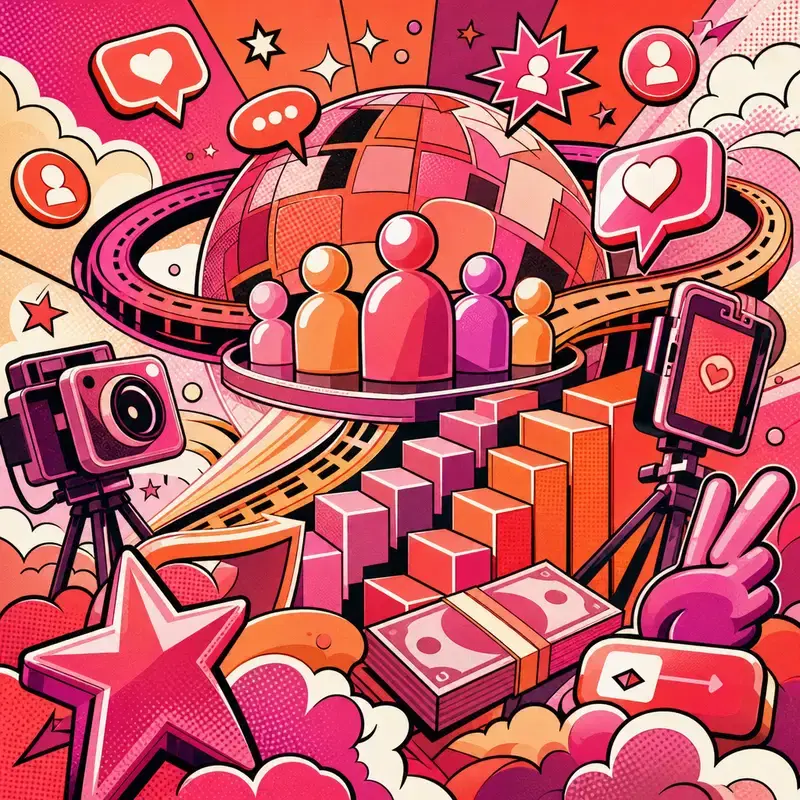
A recent move by a major game publisher to organize film, TV, products, experiences, and partnerships around its game franchises highlights a broader strategy: valuable intellectual property no longer lives in one format. The concept behind that shift is transmedia.
Why this matters now
Transmedia matters because audiences increasingly encounter a franchise through many entry points, not a single original product. Someone may first meet a game world through a streaming series, a collectible, a live event, a short video, or a themed attraction before ever playing the game itself.
For professionals, the key idea is that transmedia is not just promotion. It is a way to extend a story world, brand, or product universe across media formats while preserving what makes it recognizable. Done well, it increases audience reach, deepens engagement, and creates multiple business lines around the same underlying IP. Done poorly, it turns a meaningful world into disconnected merchandise.
This is especially relevant in AI and tech because the same pattern appears beyond entertainment. Companies now think in systems of content, community, product, data, and experiences. A strong concept can become software, training, events, media, and partner offerings. Transmedia gives you a vocabulary for managing that expansion without diluting the core.
How it works
Transmedia is the coordinated expansion of a story world or IP across multiple media, where each medium contributes something suited to its strengths. The mechanism starts with a core world, clarifies the audience promise, selects medium fit, defines canon rules, and then uses a feedback loop to learn what audiences value.
Transmedia expansion loop
  Core world
     │
     ▼
  Audience promise
     │
     ▼
  Medium fit
     │
     ▼
  Canon rules
     │
     ▼
  Feedback loop
A franchise expands by matching world audience medium and canon
The core world is the durable foundation: characters, setting, conflicts, values, visual language, and emotional appeal. The audience promise is the reason people care, such as mastery, wonder, identity, humor, fear, or belonging.
Medium fit is where strategy becomes practical. Film is good at character arcs and spectacle. Games are good at agency and systems. Books can handle inner life and lore. Live experiences create physical presence and community. Products can turn affiliation into everyday signals. A transmedia plan asks what each format can do better than the others.
Canon rules define what counts as official, optional, experimental, or promotional. Without this, franchises become confusing. With too much rigidity, they become bureaucratic. The feedback loop then measures not only sales, but also attention, community behavior, new audience entry, and whether each extension strengthens the original promise.
Real-world applications
Entertainment franchises are the most visible use case. A game can become a series, a film, a comic, a toy line, a concert, or a physical attraction. The best extensions do not simply retell the same plot. They reveal another perspective, serve a different audience moment, or make the world tangible.
Consumer brands use similar logic. A fitness brand may combine an app, classes, events, apparel, podcasts, and creator partnerships. The product is not just the app. It is the lifestyle system around the promise of progress.
Enterprise technology companies also use transmedia thinking. A complex platform might be explained through documentation, demos, certification, customer stories, community events, interactive labs, and partner programs. Each medium teaches a different part of the same product universe.
For AI teams, transmedia is useful when designing adoption programs. A new internal AI tool may need tutorials, office hours, workflow examples, role specific playbooks, leader messaging, and hands on sandboxes. The goal is not more content for its own sake. The goal is coherent learning across contexts.
Where to go deeper
To build transmedia skill, study three areas.
First, learn media affordances: what each format is uniquely good and bad at doing. Second, learn IP governance: how teams manage canon, approvals, rights, quality, and partner incentives. Third, learn audience journey design: how people enter, explore, participate, and advocate across touchpoints.
A practical test is simple: if an extension disappeared, would the overall world lose something meaningful? If yes, it is likely transmedia. If no, it may just be licensing, advertising, or merchandise.