Concept explainer·
What is software as a service?
The news behind this explainer:Read the story on NewsPals
A recent enterprise AI funding story highlights a familiar pattern: buyers are not just buying algorithms; they are buying software that can be delivered, operated, and improved without standing up a new internal product team. That is the core promise of software as a service, usually shortened to SaaS.
Why this matters now
SaaS has become the default way many companies buy business software because it converts a complex technology project into an ongoing service relationship. Instead of purchasing software, installing it on company servers, patching it manually, and negotiating upgrades every few years, customers subscribe to an application that the provider operates for them.
That shift matters even more as AI enters enterprise workflows. Many companies do not want another blank tool that requires months of internal integration before anyone sees value. They want software that connects to existing systems, reflects how work actually gets done, and keeps improving as requirements change.
SaaS is not just a pricing model. It is an operating model. The provider is responsible for availability, security patches, feature delivery, infrastructure scaling, and much of the maintenance burden. The customer still owns business decisions, data governance, adoption, and process change, but the technical undifferentiated heavy lifting moves outside the company.
How it works
Software as a service is an application delivered over the internet and paid for as an ongoing subscription or usage based service. Customers access the application through a browser, API, or connected workflow, while the provider runs the underlying platform, releases updates, monitors reliability, and manages the shared infrastructure.
- Customer access
- Provider operates platform
- Continuous updates
- Measured usage
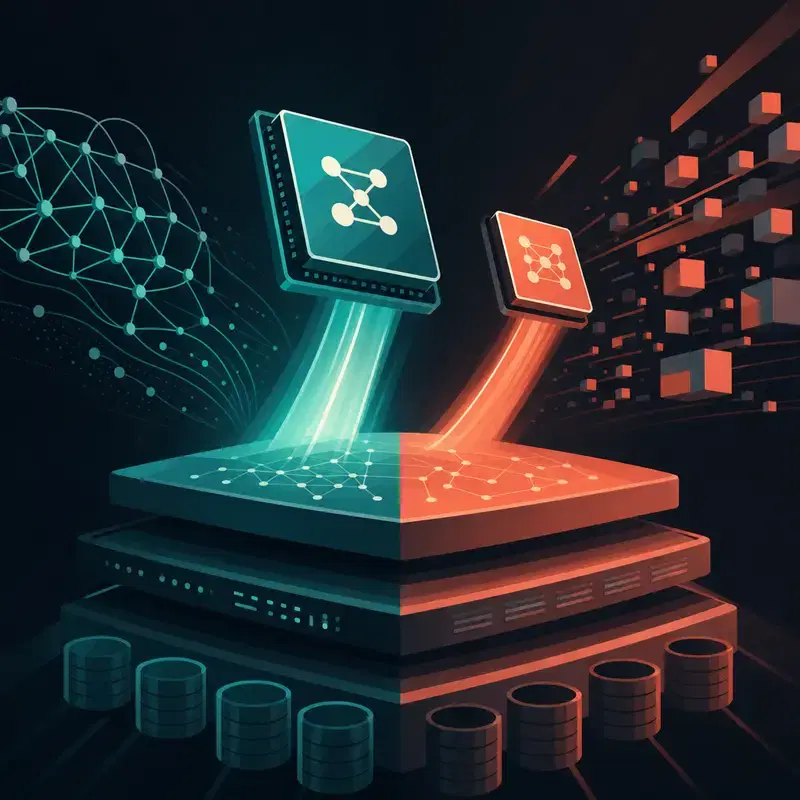
SaaS turns software delivery into a managed operating cycle.
The practical mechanism is simple but powerful. A provider builds one core product that can serve many customers, often with configuration, permissions, integrations, and data separation for each account. Because the product is centrally operated, improvements can be shipped continuously rather than packaged into rare major releases.
For customers, the main benefit is speed to value. Teams can start using a capability without procuring servers, hiring administrators, or managing upgrade projects. For providers, the advantage is recurring revenue and a direct feedback loop from usage data, support patterns, and customer outcomes.
The tradeoff is dependency. A SaaS customer relies on the provider for uptime, security posture, roadmap decisions, data portability, and commercial terms. Mature buyers evaluate not only features, but also service level commitments, integration quality, governance controls, identity management, auditability, and exit options.
Real-world applications
Common SaaS categories include customer relationship management, enterprise resource planning, human resources systems, finance tools, collaboration platforms, analytics products, cybersecurity tools, and developer platforms. In each case, the buyer is not merely renting code. They are relying on an external operating model for a critical business capability.
In AI enabled SaaS, the model often extends beyond a generic application. The service may include workflow builders, model orchestration, retrieval over company knowledge, monitoring, and human review controls. Some providers also pair the platform with implementation experts who learn the customer process and configure the system around real operational constraints.
That is especially relevant in enterprise AI because value usually appears in workflows, not demos. A forecasting assistant, support triage system, sales operations tool, or compliance reviewer must connect to business data, respect permissions, handle exceptions, and fit into how teams already work.
Where to go deeper
To understand SaaS well, go beyond the acronym. Study multi tenant architecture, subscription economics, customer success, service level agreements, identity and access management, API integration, data residency, and vendor risk management.
For AI SaaS specifically, learn how context management, retrieval augmented generation, evaluation, observability, and governance change the product. The durable question is not whether the software is hosted in the cloud. It is whether the provider can reliably turn a business problem into an operated capability that improves over time.