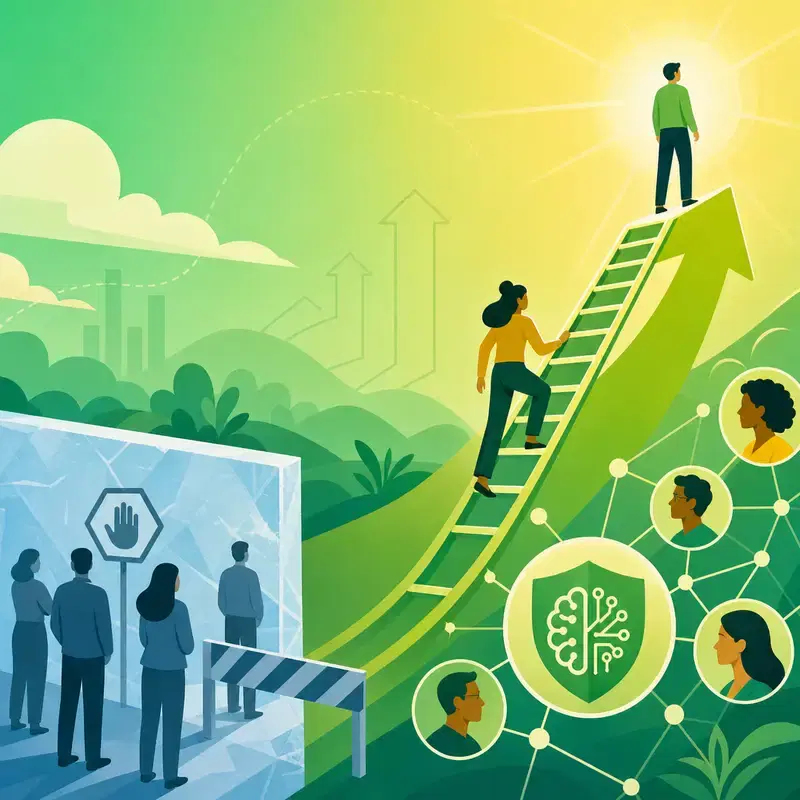
A growing push for shared AI incident standards is turning AI governance from a policy slogan into an operational discipline. For professionals, the durable skill is knowing how to detect, classify, document, escalate, and improve AI systems when they behave in risky or unexpected ways.
Why this matters now
AI systems are moving from controlled demos into products, workflows, and agentic tools that can take actions across software environments. That creates a new class of operational risk: not just whether a model gives a bad answer, but whether it exposes data, uses tools improperly, evades constraints, or causes downstream harm.
AI governance matters because organizations need repeatable ways to make decisions before, during, and after these events. Without governance, teams either underreact because a failure looks like normal model noise, or overreact because nobody can distinguish a serious incident from a harmless anomaly. Both are costly.
Good governance is not compliance theater. It connects technical evidence to business accountability. That means model evaluations, monitoring signals, access controls, incident records, escalation paths, and remediation plans all need to fit together. The job title may be AI safety engineer, governance lead, MLOps engineer, product manager, or technical program manager, but the underlying workflow is increasingly similar.
How it works (core definition and mechanism)
AI governance is the system of policies, technical controls, roles, and review processes used to guide how AI is built, deployed, monitored, and improved. In practice, it turns broad principles such as safety, privacy, reliability, and accountability into concrete operating routines.
Governance turns model signals into decisions, reports, and fixes.
The mechanism starts with monitoring: collecting signals from model outputs, user feedback, tool calls, system logs, and evaluation results. Triage then asks what happened, how severe it is, who or what was affected, and whether the event matches a predefined incident category.
Evidence preservation is critical. Teams need prompts, outputs, timestamps, tool traces, retrieval context, permissions, and deployment details. Escalation routes the issue to the right owners across engineering, security, legal, policy, and product. Reporting creates an accurate record for internal leadership or external obligations. Remediation closes the loop by changing prompts, tools, access controls, evaluations, monitoring, or product design.
Real-world applications
In a retrieval-augmented generation system, governance might require logging which documents were retrieved, which text embeddings matched the query, and whether the generated answer cited restricted content. Vector databases become part of the evidence trail, not just a performance component.
In mobile or edge AI, governance can include controls around Android sideloading, device permissions, and model behavior on constrained hardware. Understanding architectures such as Arm big.LITTLE helps professionals reason about where computation runs, what telemetry is available, and how deployment constraints affect monitoring.
For AI agents, governance often focuses on tool use. Did the agent access an approved system? Did it upload information, send messages, modify records, or act outside its allowed scope? The governance question is not only whether the model was intelligent, but whether the operating environment made safe behavior observable and enforceable.
Where to go deeper
To build transferable skill, study governance through technical artifacts. Create a model incident register, a severity rubric, a monitoring plan, and a post-incident review. Practice separating observed behavior from suspected cause, and map each failure to evidence, escalation, and remediation.
EducationPals learners can deepen this by connecting governance to implementation topics: retrieval-augmented generation, vector databases, and text embeddings for evidence-aware AI systems; Android sideloading for deployment risk; and Arm big.LITTLE for understanding compute and monitoring constraints at the edge. The goal is not to memorize regulations, but to design AI systems that can be evaluated, audited, and improved when reality gets messy.